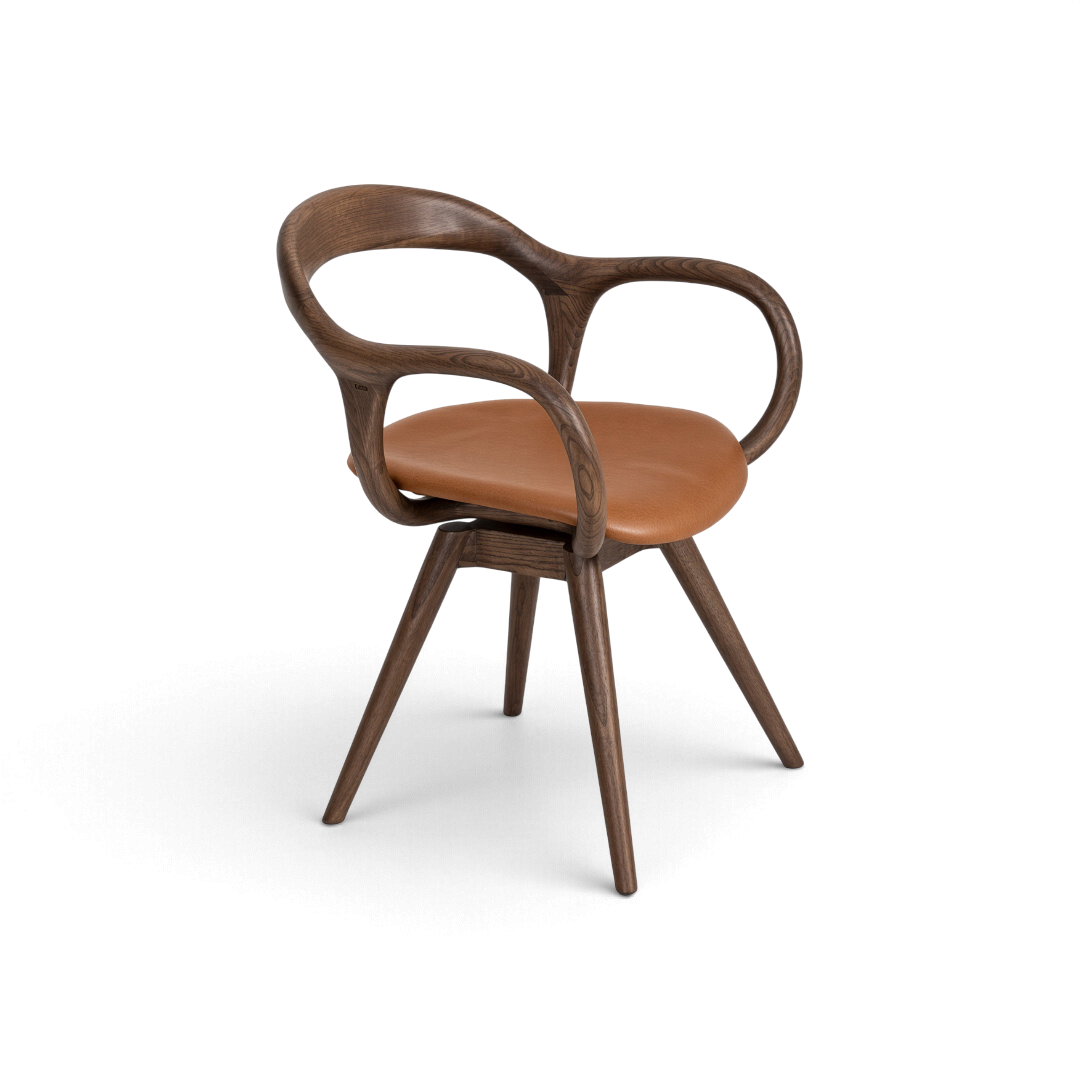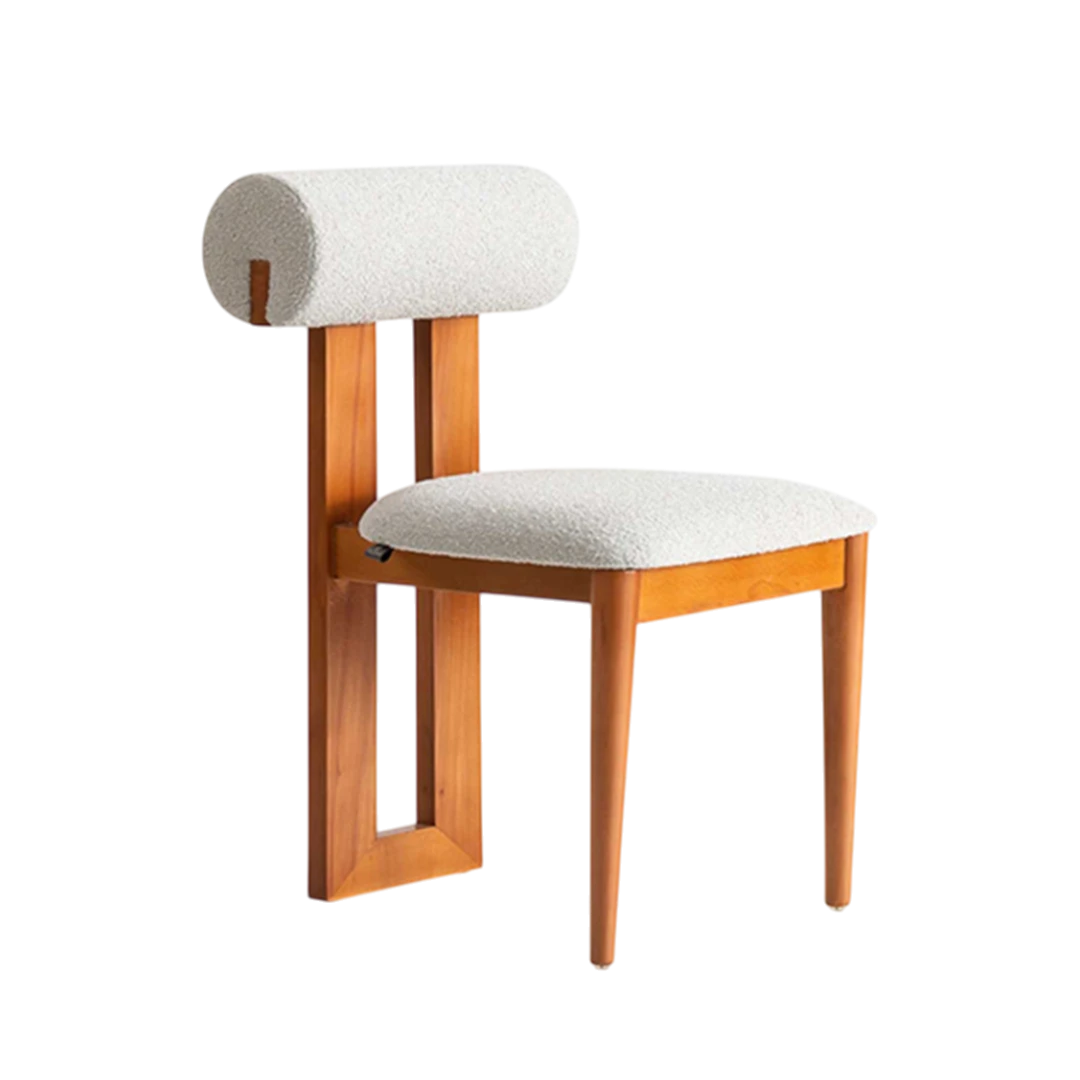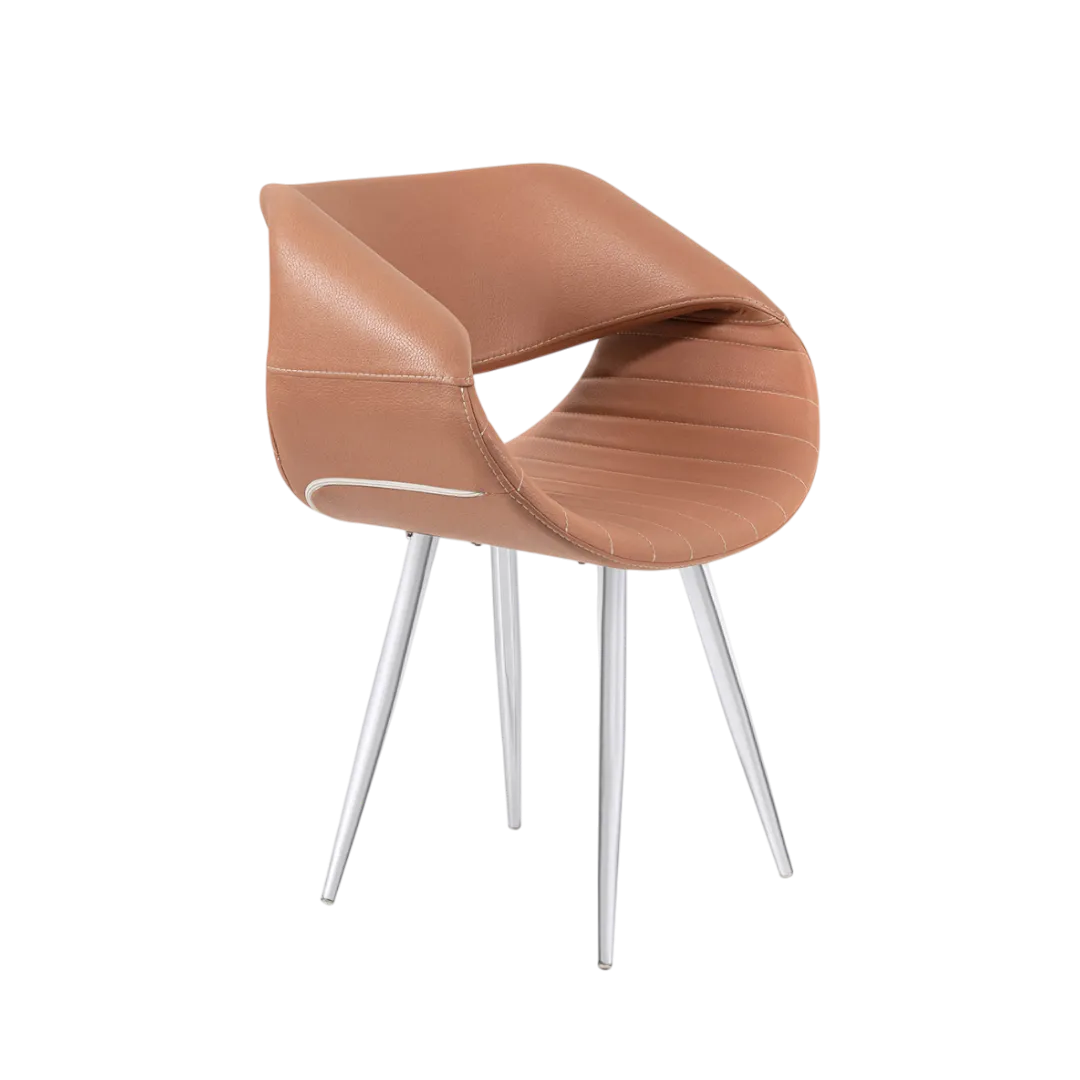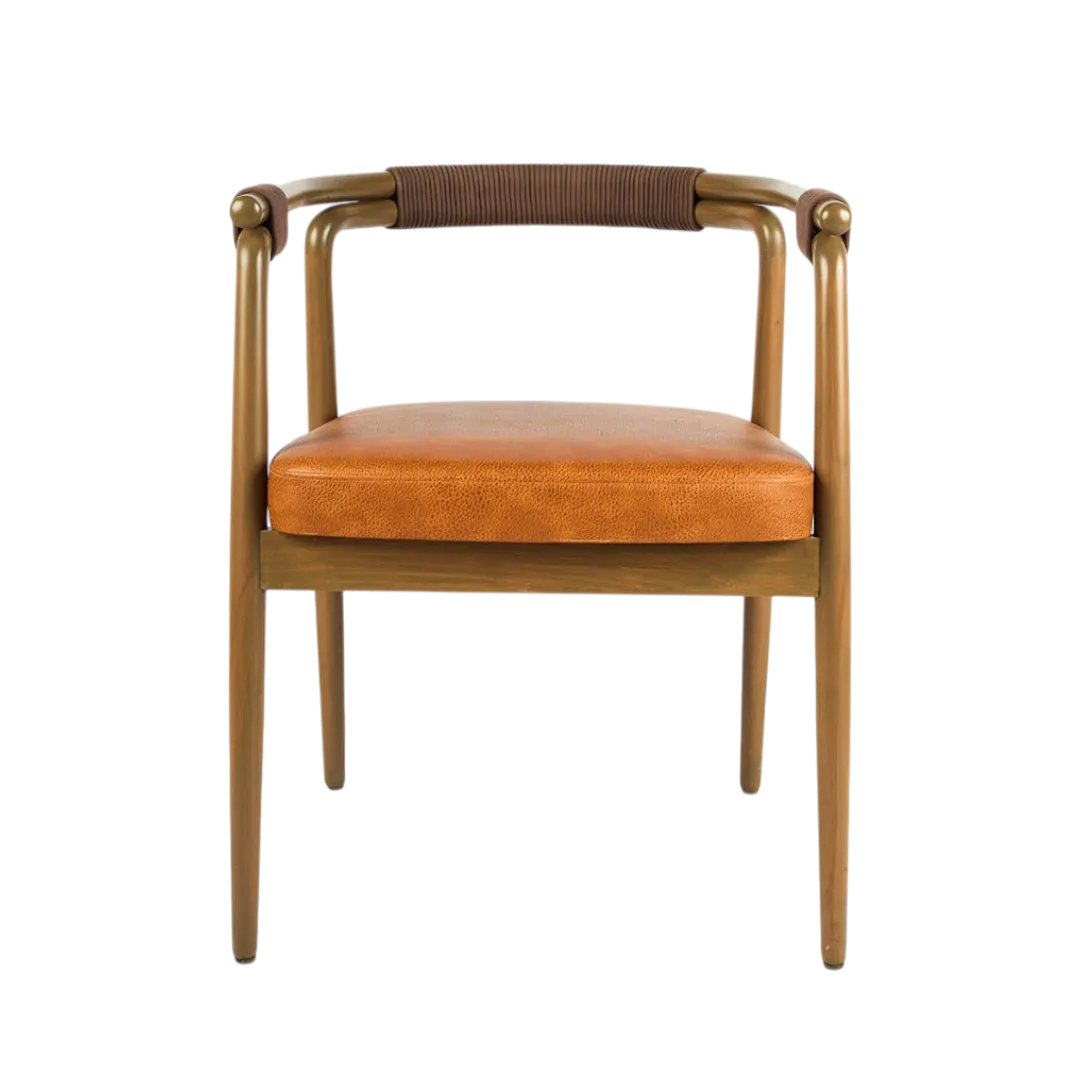
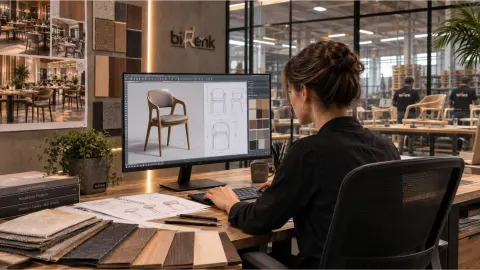
In cafe, restaurant, hotel, and other commercial interior projects, standard furniture models are not always the right solution. Some projects may require a chair designed specifically for the architectural concept, a table manufactured to particular dimensions, or a custom bar stool created exclusively for the space.
In such projects, establishing the right connection between design and manufacturing is essential.
Turning a drawing created by an architect or interior designer into a finished product requires more than evaluating its appearance. Dimensions, materials, structural construction, ergonomics, durability, and suitability for serial production must all be considered together.
At Birenk Sandalye, we manufacture custom tables, chairs, and bar stools at our production facility in İnegöl, Bursa, Türkiye. In addition to our existing collections, we work with architects, interior designers, and project teams to evaluate custom furniture designs and transform them into production-ready solutions.
So, how does a furniture design move from a project file to a finished product?
1. The Process Begins with Understanding the Project and Design
The first stage of custom furniture manufacturing is understanding the requirements of the project.
Technical drawings, 3D visuals, reference images, dimensions, and material specifications prepared by the architect or project team can be shared with the manufacturer.
Some projects may include detailed technical drawings, while others may begin with concept visuals or initial design ideas.
At this stage, it is important to consider not only how the product should look but also where and under what conditions it will be used.
For example, a restaurant chair and a piece of furniture designed for a hotel lobby may be exposed to different levels and types of use. Similarly, a wooden chair intended for an indoor environment will have different material requirements from a product designed for an outdoor terrace.
For this reason, the manufacturing process begins by evaluating the design together with its intended use.
2. Manufacturing Feasibility Is Evaluated
A piece of furniture that looks impressive in a 3D rendering or technical drawing may not always be suitable for production exactly as originally designed.
One of the most important stages of custom furniture manufacturing is evaluating the design from a production perspective.
The structural frame of a chair, connection points between the legs and body, backrest form, material thicknesses, and overall stability are among the details considered during this stage.
The objective is not to change the design unnecessarily, but to preserve its original character while making sure the finished product is suitable for real-world use.
When necessary, minor technical adjustments can be developed through communication between the architect, interior designer, and manufacturing team.
This helps establish the right balance between aesthetic expectations and manufacturing requirements.
3. The Right Materials Are Selected
Material selection directly affects both the appearance and the long-term performance of custom tables and chairs.
Depending on the project, wood, metal, upholstery fabrics, and various surface materials can be used individually or in combination.
When selecting materials, several factors should be considered:
- Indoor or outdoor use
- Expected daily usage intensity
- Desired appearance and design language
- Cleaning and maintenance requirements
- The project's color and material palette
- Expected product lifespan
For example, upholstery selected for a high-traffic restaurant may require different performance characteristics from fabric used in a lower-traffic environment.
Likewise, wood finishes, metal surfaces, and upholstery colors can be selected to complement the overall architectural concept.
4. Dimensions and Ergonomics Are Reviewed
In custom chair design, ergonomics are just as important as aesthetics.
Dimensions specified in technical drawings should always be evaluated in relation to actual usage conditions.
Seat height, seat width, backrest angle, armrest height, and the relationship between the chair and table all directly affect user comfort.
For bar stools, the height of the bar counter or high table is particularly important. Seat height and footrest position should be planned accordingly.
For tables, overall height, tabletop dimensions, leg positioning, and available space for users should also be evaluated together.
These checks help ensure that the design is not only visually successful but also functional in everyday use.
5. Sample and Prototype Production
Especially for projects requiring large quantities, producing a sample or prototype before beginning serial production can provide significant advantages.
A detail that appears correct in a technical drawing may feel or look different once the physical product has been manufactured.
A prototype allows several aspects of the product to be evaluated, including:
- Overall form
- Dimensions
- Seating comfort
- Wood or metal finishes
- Fabric and upholstery details
- Connection points
- Overall compatibility with the original design
The architect, interior designer, or project team can review the sample and determine whether any adjustments are required before full-scale manufacturing begins.
For projects involving hundreds of products, this stage is particularly important for ensuring consistency throughout the production process.
6. Serial Production Begins After Design Approval
Once the sample and technical details have been approved, the product can proceed to serial production.
At this stage, the objective is not simply to manufacture the required quantity. It is also essential to maintain the approved specifications and quality standards across every product.
Material preparation, production of wooden or metal components, assembly, surface treatments, finishing, painting, upholstery, and other processes are carried out according to the established production plan.
Project-based furniture manufacturing may also involve several different product groups being produced at the same time.
A restaurant project, for example, may require dining chairs, bar stools, and tables. A hotel project may include several different chair models for restaurants, cafes, bars, lounges, and other areas.
For this reason, the production schedule should be planned according to the requirements of the entire project.
7. Quality Control Is an Essential Part of Project Manufacturing
In serial production, maintaining visual and structural consistency between products is essential.
Chairs used within the same project, for example, should maintain consistent dimensions, upholstery, wood finishes, colors, and manufacturing details.
Quality control procedures during and after production help ensure that finished products comply with the approved project specifications.
This becomes particularly important in large-volume production, where consistency between individual products contributes directly to the overall visual quality of the completed project.
8. Packaging and Delivery
Completing production is not the final stage of a furniture project.
Ensuring that finished products reach the project site safely is also an important part of the process.
Suitable packaging methods should be selected according to the characteristics of the furniture and the destination. Proper packaging helps reduce the risk of damage during transportation.
For both domestic and international projects, delivery planning should be coordinated with the production schedule.
Especially when a project has a fixed opening date or installation schedule, products need to be manufactured, inspected, packaged, and prepared for shipment according to the project timeline.
Existing Models Can Also Be Customized for a Project
Custom furniture manufacturing does not always mean designing a completely new chair or table from the beginning.
Existing furniture models can also be customized to create a project-specific result.
For example, an existing chair model can be modified through different:
- Wood finishes
- Upholstery fabrics
- Upholstery styles
- Metal details
- Surface finishes
This approach provides an alternative for architects and interior designers who like the form of an existing model but want to adapt it to the specific colors, materials, and visual identity of their project.
Why Is Communication Between the Architect and Manufacturer Important?
Successful custom furniture projects depend heavily on effective communication between the design and manufacturing teams.
While architects and interior designers establish the visual language and design objectives of the project, manufacturers contribute their knowledge of materials, construction methods, and production techniques.
Collaboration between these disciplines helps transform the original design into a physical product as accurately as possible.
Especially for furniture featuring unusual forms or combinations of different materials, involving the manufacturing team at an early stage can also help identify and resolve potential technical challenges before production begins.
Custom Table and Chair Manufacturing in İnegöl, Türkiye
Based in İnegöl, Bursa, one of Türkiye's leading furniture manufacturing centers, Birenk Sandalye manufactures furniture for cafes, restaurants, hotels, and various commercial interior projects.
Tables, chairs, and bar stools from our existing collections can be customized with different colors, materials, finishes, and upholstery options according to project requirements.
In addition, custom furniture designed by architects, interior designers, and project teams can be technically evaluated and developed for manufacturing.
Alongside projects throughout Türkiye, production and delivery can also be planned for international projects in different countries.
A Design Becomes a Real Product Through the Right Manufacturing Process
Custom furniture manufacturing is much more than simply sending a drawing to a factory and producing it.
Design evaluation, manufacturing feasibility, material selection, dimensional and ergonomic checks, prototype development, serial production, quality control, packaging, and delivery are all interconnected stages of the process.
When these stages are managed correctly, a table or chair originally created as part of an architectural concept can become a functional product suitable for real-world use while preserving the character of the original design.
The objective of custom furniture manufacturing is not simply to produce a design, but to create the right connection between design and production.